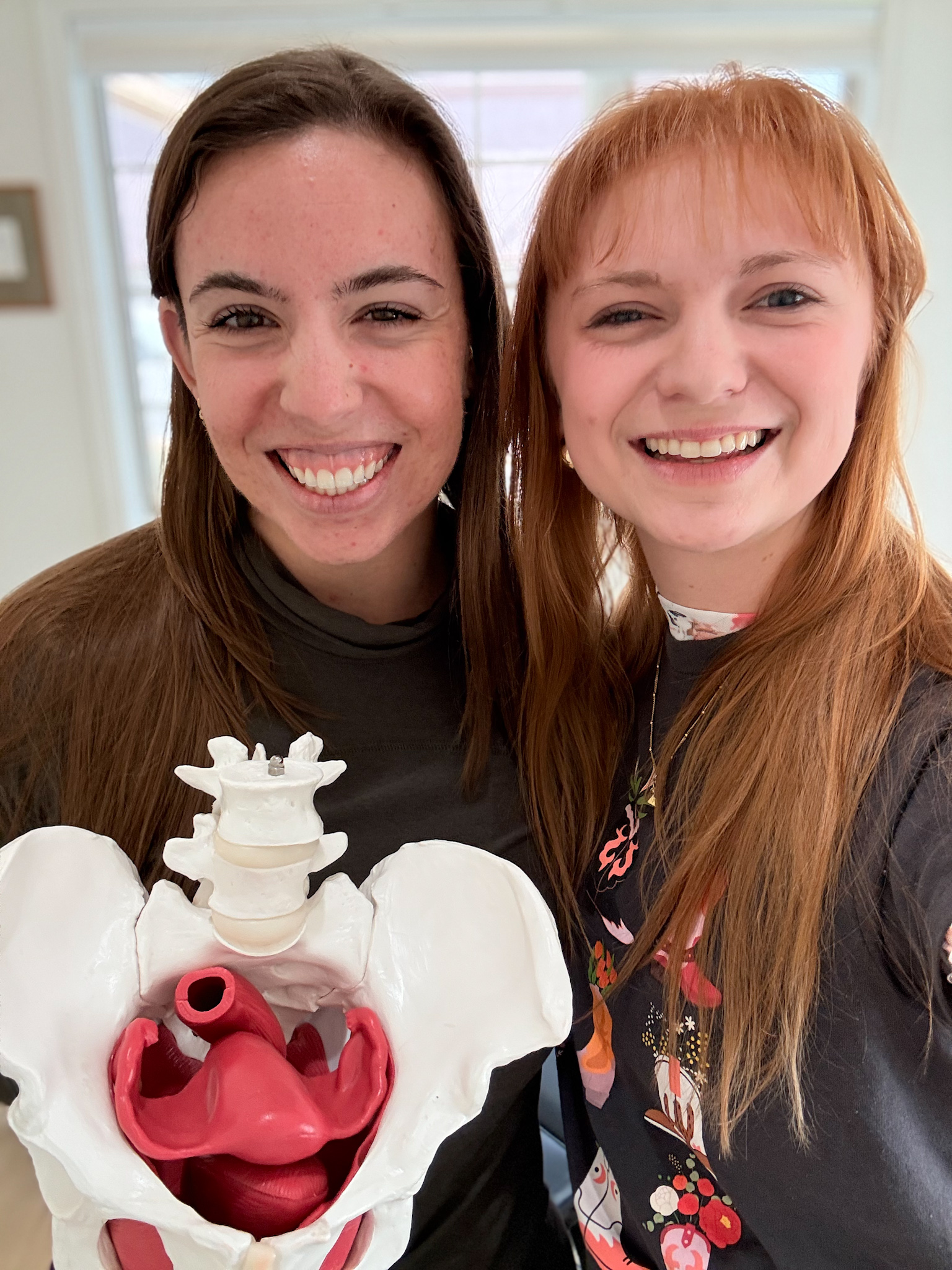
Can we talk about something that we highly neglect as moms, for a minute?
If you follow me on social media than you know I recently shared my experience seeing a pelvic floor therapist. After becoming a mom I knew I needed to address some unhealed pelvis issues and could tell especially after having my 3rd baby that my pelvis and core didn’t heal properly.
After a visit first to my gynecologist she suggested pelvic floor therapy.
Thanks to our community my family knew exactly where to go, and I was referred to the capable hands of Sarah Kaderka with The Health Lab. Sarah was professional but also made me feel very comfortable from my very first appointment. She explained things thoroughly and started me on a path to the healing I knew my body needed. I have been so thrilled with my progress and want to do my part in bringing awareness to what an important topic this is and especially to my fellow mammas!
Sarah was kind enough to answer some common questions surrounding a woman’s pelvic floor. And to help us understand more of its role and why we should be paying attention!
- Why is it important to address your pelvic floor health and when is the best time?
“Your pelvic floor is involved in way more of your daily life than most people realize. These muscles help control your bladder and bowel, support your organs, contribute to sexual function, stabilize your core, and even respond to stress and breathing patterns.
The tricky part? We usually don’t think about the pelvic floor until something starts going wrong.
The best time to address pelvic floor health is before symptoms become disruptive—just like you would with dental cleanings or annual physicals. Pelvic floor physical therapy isn’t only about fixing problems; it’s also about learning how your body works, improving coordination between the pelvic floor, breathing, hips, and core, and building habits that support long-term function.
But if you’re already having symptoms, that’s okay too. The pelvic floor is highly adaptable, and with the right guidance, it can change and improve at almost any stage of life.”
- What pelvic issues do you specialize in and what does a first appointment look like?
“I treat the full spectrum of pelvic health concerns. The most common ones include:
- Leakage of urine or stool
- Urgency (that sudden “I need a bathroom now” feeling)
- Frequency (going to the bathroom a lot)
- Pain — including hip or back pain, pain with sex, or discomfort with bowel movements or urination
- Prolapse (which can feel like Heaviness or pressure in your pelvis)
- Recovery after medical treatments or surgeries such as hysterectomy, bladder slings, or cancer treatment
- Support for conditions like endometriosis or PCOS when symptoms affect pelvic function
A first appointment is mostly conversation and movement assessment. We talk about your symptoms, daily habits, stress, sleep, exercise, and goals—because pelvic health rarely exists in isolation.
Then we look at how your body moves and coordinates things like breathing, core control, hip strength, and pelvic floor function.
Internal exams are optional, but they’re often recommended because they give us the clearest picture of how the pelvic floor muscles and nervous system are functioning.
If you choose to do one, the exam is typically performed vaginally and is very gentle. We check how the nerves and muscles respond, look for areas of sensitivity (which we never push into), and assess things like strength, endurance, relaxation, and coordination.
By the end of the visit, the goal is simple: for you to understand what’s happening in your body and leave with a clear, personalized plan moving forward.”
- Are there preventative ways to prepare your pelvic floor while you’re pregnant, for a better recovery after birth?
“Yes! If possible, I recommend seeing a pelvic floor physical therapist sometime in the second trimester.
Pregnancy changes how your body manages pressure, movement, breathing, and load. A pelvic PT can help you understand how your pelvic floor is functioning early on so you can adapt to those changes instead of fighting them.
Preparation during pregnancy usually focuses on things like:
- Breathing and pressure management
- Maintaining hip and core strength
- Learning how to relax and coordinate the pelvic floor for birth
- Strategies to reduce strain on the bladder, bowel, and pelvic tissues
People are often surprised that pelvic floor therapy isn’t just about strengthening—it’s also about learning when to relax and how the whole system works together.
Starting this work during pregnancy often makes recovery after birth smoother and helps people feel more confident returning to exercise and daily activities.”
- What made you become passionate about this and how did you develop a love for helping women in this area?
“In physical therapy school, pelvic floor PT gets about one day of coverage—mostly so you can recognize symptoms and refer patients somewhere else. On that day I remember thinking, “This stuff seems good to know, but I likely will never use it.”
Then during my clinical rotations, I kept getting placed with pelvic floor physical therapists. The more exposure I had, the more I realized how many people were quietly dealing with these issues.
The moment that really stuck with me was a conversation with my mom during my first clinical rotation. I was explaining what pelvic floor PT was, and she casually said, “Oh, I’ve had leakage ever since I had you.” Then she added that her best friend and my grandma did too.
She said it like it was just part of life.
That conversation opened my eyes to how common these issues are—and how normalized they’ve become, even though help exists.
After that, I started having similar conversations with women everywhere: patients, friends, family members. Again and again, I saw the same gap in awareness and care around pelvic health.
That’s when I knew I wanted to specialize in it. I started taking additional pelvic health courses while I was still finishing my doctorate so I could start treating this population right away.
What I love most about this work is helping people understand their bodies again. When someone realizes their symptoms aren’t something they just have to live with—and that they can regain trust in their body—it’s incredibly empowering.”
Thank you Sarah for such amazing insight into something that gets so little attention.
If you’re a mamma and haven’t ever had your pelvic floor checked I encourage you to. It’s made a difference in my life!
Fellow mamma, Shantel
Leave a Reply